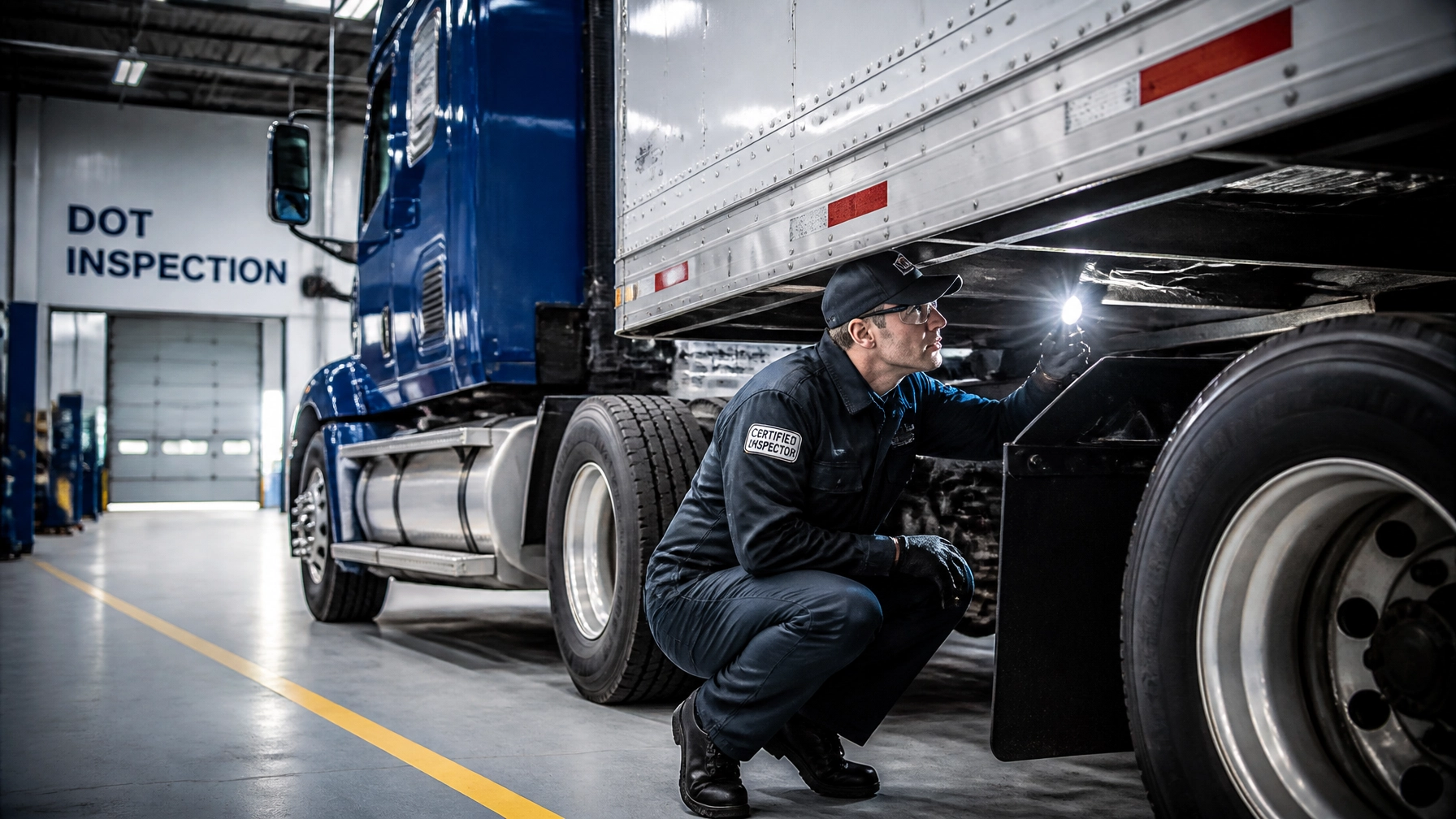
For fleet owners and owner-operators in North Florida, a DOT inspection isn't just a regulatory hurdle: it’s a critical health check for your business. In the logistics and transportation industry, downtime is the ultimate enemy. A single Out-of-Service (OOS) order can stall a delivery, rack up fines, and damage your safety rating.
As we move through 2026, the Commercial Vehicle Safety Alliance (CVSA) has introduced specific focus areas and updated criteria that every carrier must understand. Staying ahead of these changes ensures your trucks stay on I-95 and I-10 rather than sitting in an enforcement lot.
At Northpoint Truck Center, we prioritize your uptime by providing certified DOT inspections and comprehensive fleet maintenance. Here are the five critical updates you need to know to ensure a clean inspection this year.
1. The 2026 International Roadcheck Focus: ELD Compliance and Tampering
The 2026 CVSA International Roadcheck, scheduled for May 12–14, centers on two primary categories: one for the driver and one for the vehicle. On the driver side, the spotlight is firmly on Electronic Logging Device (ELD) compliance.
Inspectors are no longer just looking to see if you have an ELD; they are looking for signs of tampering, falsification, and unauthorized edits. With the advancement of digital tools, the CVSA has ramped up its ability to detect "ghost driving" and unidentified driving time.
What inspectors are checking:
- Unassigned Mileage: Excessive amounts of unidentified driving time on the device will trigger an audit.
- PC Misuse: Using Personal Conveyance (PC) to move freight or reposition toward a destination is a major red flag.
- Data Transfer Proficiency: Drivers must be able to demonstrate they can successfully transfer ELD data to an officer upon request.
To minimize risk, ensure your drivers are fully trained on their specific ELD hardware. We often see violations simply because a driver didn’t know how to navigate the menu for an inspector. Regular audits of your Records of Duty Status (RODS) against fuel receipts and GPS data can help you catch inconsistencies before the DOT does.

2. Cargo Securement: It’s Not Just for Flatbeds
While the driver focus is on ELDs, the vehicle focus for the 2026 Roadcheck is Cargo Securement. This is a common misconception in the industry; cargo securement rules apply to all commercial motor vehicles, including dry vans and reefers.
If you are hauling a sealed trailer, inspectors will still examine what is visible: the integrity of the doors, the condition of any exterior securement devices, and signs of shifting loads that could affect vehicle stability. For open-deck trailers, the scrutiny is even higher.
Key areas of concern:
- Tie-down Condition: Any nicks, knots, or frayed webbing on straps can lead to an OOS order.
- Anchor Points: Ensure that winches and D-rings are not cracked or improperly welded.
- Load Distribution: Improperly balanced loads can lead to axle weight violations and increased wear on your brake and air systems.
Maintaining the structural integrity of your trailers is essential. Our trailer repair services include detailed inspections of floors, rails, and securement points to ensure your cargo: and your driver: stays safe.
3. New 2026 Out-of-Service Criteria: English Proficiency
On April 1, 2026, the new North American Standard Out-of-Service Criteria (OOSC) went into effect. One of the most significant changes involves Driver Qualifications, specifically the English-language proficiency requirement under 49 CFR 391.11(b)(2).
The 2026 update clarifies that a driver who cannot speak or read English sufficiently to converse with the general public, understand highway signs, or respond to official inquiries can be placed Out-of-Service. This is no longer just a technicality; it is a safety-critical requirement that inspectors are actively enforcing at scales and roadside stops.
Ensure your driver qualification files are up to date and that all drivers meet these regulatory standards. This proactive step prevents preventable delays and ensures clear communication during a roadside stop.
4. Brake Safety Week 2026: The August Enforcement Surge
Brake-related violations consistently account for the largest percentage of vehicle out-of-service orders. To combat this, CVSA has scheduled Brake Safety Week for August 23–29, 2026.
During this week, inspectors will conduct Level I and Level V inspections with a heavy emphasis on brake system components. They will be looking for air leaks, worn linings, and improper brake adjustment. Even a minor air leak at a glad-hand or a slightly over-extended pushrod can ground a truck.
How to prepare:
- Listen for Leaks: Conduct a daily air loss rate test.
- Check Pads and Linings: Ensure brake pads meet the minimum thickness requirements.
- Verify Adjustment: Automatic slack adjusters should be checked for proper function but never manually adjusted as a "quick fix" for an internal mechanical issue.
At Northpoint Truck Center, our technicians use advanced diagnostics to identify brake imbalances and potential failures before they become roadside emergencies. A pre-trip inspection at our facility can save you thousands in fines and towing fees.

5. Transitioning from Reactive to Preventive Maintenance
The most effective way to secure a clean DOT inspection is to stop viewing inspections as a "test" you have to pass and start viewing maintenance as a competitive advantage. The carriers who succeed in 2026 are those who invest in customized fleet maintenance programs.
A preventive maintenance (PM) schedule ensures that every truck in your fleet is looked at by a professional on a regular basis. This allows for the early detection of issues that standard pre-trip inspections might miss: such as hairline cracks in a frame, hidden electrical issues, or internal engine repair needs.
Benefits of a PM Program:
- Lower Overall Costs: It is always cheaper to replace a belt in the shop than an entire engine on the side of the road.
- Improved CSA Scores: Clean inspections lead to better safety ratings, which can lower your insurance premiums and attract higher-paying freight contracts.
- Driver Retention: Drivers feel safer and more respected when they are behind the wheel of a well-maintained, compliant vehicle.
Our state-of-the-art workshop in North Florida is equipped to handle everything from minor DOT adjustments to major overhauls, ensuring your fleet remains a leader in safety and reliability.

Moving Forward: Your Partners in Compliance
Navigating the 2026 CVSA updates doesn't have to be a source of stress. Whether you are an owner-operator with one truck or a fleet manager overseeing a large logistics operation, Northpoint Truck Center is here to support your success.
We understand that in this industry, the mission is simple: keep moving. Our commitment to fast turnaround times, priority fleet scheduling, and expert technical service is designed to minimize your downtime and maximize your safety.
If you are concerned about your next DOT inspection or want to audit your current maintenance practices, don’t wait for the red lights of an inspection station to find a problem. Book an appointment today and let our certified technicians ensure your fleet is road-ready.
Drive the Future. Move Forward with Northpoint Truck Center.

One Comment
[…] Your diesel engine powers more than just the wheels, it powers your brakes. The air compressor is a vital component of the engine assembly. If diagnostics show the compressor is cycling too frequently or failing to maintain pressure, your entire brake system is compromised. This is one of the most common reasons for failed DOT inspection services. […]