For fleet owners and owner-operators in North Florida, the DOT inspection isn’t just a legal hurdle, it’s a critical checkpoint for the safety and longevity of your business. A single "Out of Service" (OOS) violation can ground your vehicle, disrupt your logistics chain, and hit your bottom line with heavy fines.
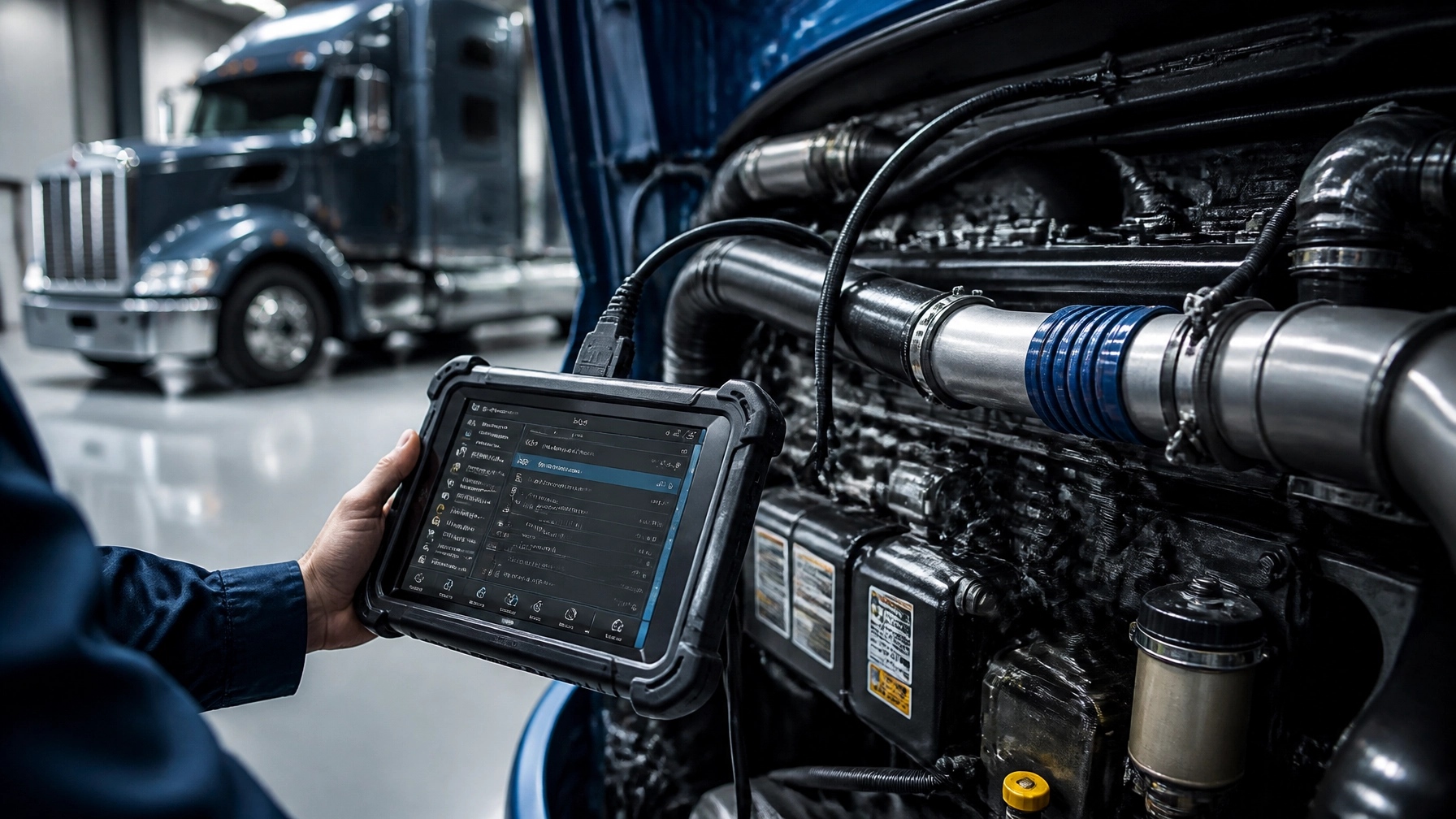
While many drivers focus on tires and lights, the heart of your truck, the engine, is often where the most complex compliance issues hide. Modern heavy duty diesel repair has shifted from simple mechanical adjustments to sophisticated digital analysis. Understanding how diesel engine diagnostics intersect with DOT requirements is the key to maintaining a clean record and a reliable fleet.
At Northpoint Truck Center, we specialize in bridging this gap. We ensure your trucks aren't just "running," but are fully compliant and optimized for the long haul. Here are 10 critical things you need to know about diesel diagnostics before your next DOT inspection.
1. Active DTCs are a Red Flag for Inspectors
Diagnostic Trouble Codes (DTCs) are your engine's way of signaling that something is wrong. While not every code will automatically result in a failure, a "Check Engine" or "MIL" (Malfunction Indicator Lamp) light is an immediate invitation for an inspector to dig deeper. If your dashboard is lit up like a Christmas tree, you’re essentially flagging your vehicle for a more rigorous secondary inspection. Expert diesel engine diagnostics can clear these codes, not by just hitting "delete," but by fixing the underlying sensor or mechanical fault.
2. Leak Detection: More Than Just a Puddle
Under 49 CFR 396.17, federal inspectors look closely at fuel, oil, and coolant systems. Any visible leak is a liability. However, some leaks aren't obvious to the naked eye. Advanced diagnostics can identify pressure drops in the fuel rail or cooling system before they become visible drips on the pavement. Addressing these during routine fleet maintenance services prevents emergency roadside failures.

3. The Smoke Signal: Opacity and Emissions
If your exhaust is putting out excessive black, blue, or white smoke, you are at high risk for an emissions-related violation. Smoke opacity is a direct reflection of engine health. Black smoke usually indicates a fuel-to-air ratio problem, while blue smoke points to oil consumption. Modern semi truck engine repair requires analyzing the Diesel Particulate Filter (DPF) and Selective Catalytic Reduction (SCR) systems to ensure you aren't leaving a trail that attracts unwanted attention from authorities.
4. Fuel System Integrity and "Limp Mode"
A faulty fuel injector or a failing high-pressure pump won’t just hurt your MPG; it can trigger "Limp Mode." If a DOT inspector notices your truck struggling to move or lacking the power to maintain highway speeds safely, they can deem the vehicle a hazard. Early diagnostics can catch fuel delivery issues, ensuring your truck has the power it needs to stay compliant and on schedule.
5. Cooling System Stability
An overheating engine is a dangerous engine. Inspectors look for cracked hoses, worn belts, and low coolant levels. Through our mechanical services, we use diagnostic tools to monitor real-time temperatures and fan clutch engagement. If your engine’s cooling system isn't communicating correctly with the ECM, you’re looking at a potential OOS order during a roadside check.
6. The Air Compressor Connection
Your diesel engine powers more than just the wheels, it powers your brakes. The air compressor is a vital component of the engine assembly. If diagnostics show the compressor is cycling too frequently or failing to maintain pressure, your entire brake system is compromised. This is one of the most common reasons for failed DOT inspection services.

7. Electrical System Health
Modern trucks rely on a complex network of wires and modules. A failing alternator or a parasitic battery drain can lead to dimming lights or faulty sensor readings. Since lighting is a primary focus of DOT inspections, ensuring your engine’s electrical output is stable is paramount. We recommend a full electrical diagnostic as part of your fleet maintenance services.
8. Turbocharger Performance
A leaking turbo seal or a failing actuator can cause significant oil consumption and power loss. Inspectors often check for oil residue around the turbocharger housing. Diagnostic tools can measure boost pressure and VGT (Variable Geometry Turbo) position to ensure the system is operating within factory specs, preventing expensive roadside emergency truck repair.
9. Software Updates and ECM Calibration
Sometimes, "engine problems" are actually software problems. Manufacturers frequently release ECM updates that improve emissions compliance and fuel efficiency. Part of expert diesel engine diagnostics involves checking for these updates. An unoptimized ECM can cause the engine to run "dirty," leading to failed emissions tests in states with strict opacity requirements.
10. Predictive vs. Reactive Maintenance
The best way to pass a DOT inspection is to never have a "surprise" failure. By utilizing regular heavy duty diesel repair diagnostics, we can see the "health trends" of your engine. We look for rising exhaust temperatures or fluctuating oil pressures that signal a future failure. This proactive approach keeps you "Moving Forward" rather than stuck in a repair bay.

Why Northpoint Truck Center is Your Best Partner
Based in Jacksonville, FL, Northpoint Truck Center understands the unique demands of North Florida logistics. Whether you are running up and down I-95 or managing local deliveries, our team provides the precision and speed you need.
Our mobile truck repair units are equipped with the same advanced diagnostic software found in our shop, allowing us to perform semi truck engine repair wherever you are. We don't just fix symptoms; we solve the root cause to ensure your fleet stays compliant and your drivers stay safe.
Minimize Downtime, Maximize Compliance
Don't wait for a roadside inspector to find a problem. Our DOT inspection services are designed to be thorough and efficient. We use a "no-surprises" approach, identifying every potential issue before it becomes a violation.

Conclusion: Drive the Future with Confidence
The transition from traditional mechanical work to digital diesel engine diagnostics is a win for fleet owners. It provides a level of clarity and predictability that was impossible a decade ago. By understanding these 10 key areas, you can transform your DOT inspection from a stressful event into a routine confirmation of your fleet’s excellence.
Ready to ensure your trucks are in peak condition? Book an appointment today and let our expert technicians give your fleet the premium care it deserves.
Frequently Asked Questions (FAQ)
Q: Can a check engine light cause me to fail a DOT inspection?
A: While a check engine light itself may not always be an automatic failure, it often indicates a fault in a system (like emissions or fuel) that is a violation. Inspectors see a warning light as a reason to perform a more detailed inspection.
Q: How often should I get diesel engine diagnostics performed?
A: We recommend a full diagnostic scan at every PM (Preventative Maintenance) interval, or at least every 6 months, to catch latent issues before they trigger a DOT violation.
Q: Does mobile truck repair include advanced diagnostics?
A: Yes. At Northpoint Truck Center, our mobile units are equipped with advanced computer diagnostic tools to handle everything from clearing codes to identifying complex engine faults on-site.
Q: What is the most common engine-related DOT violation?
A: Fluid leaks (oil, fuel, or coolant) and exhaust system defects (leaks or excessive smoke) are among the most frequent engine-related citations.
Q: Do you offer certified DOT inspection services in Jacksonville?
A: Absolutely. We provide comprehensive, certified DOT inspections and can perform any necessary repairs immediately to ensure your truck passes with flying colors.
One Comment
[…] Northpoint, we utilize advanced diesel engine diagnostics to catch issues before they trigger an electronic logging device (ELD) fault or a roadside […]